In one year, Rev went from a transaction-based service to a SaaS product
Stop the churn. Shift from transactional to SaaS. Quickly. How a small design team rebuilt mobile, activation, meetings and checkout around the behaviors that make people stay.
Executive summary
7 min read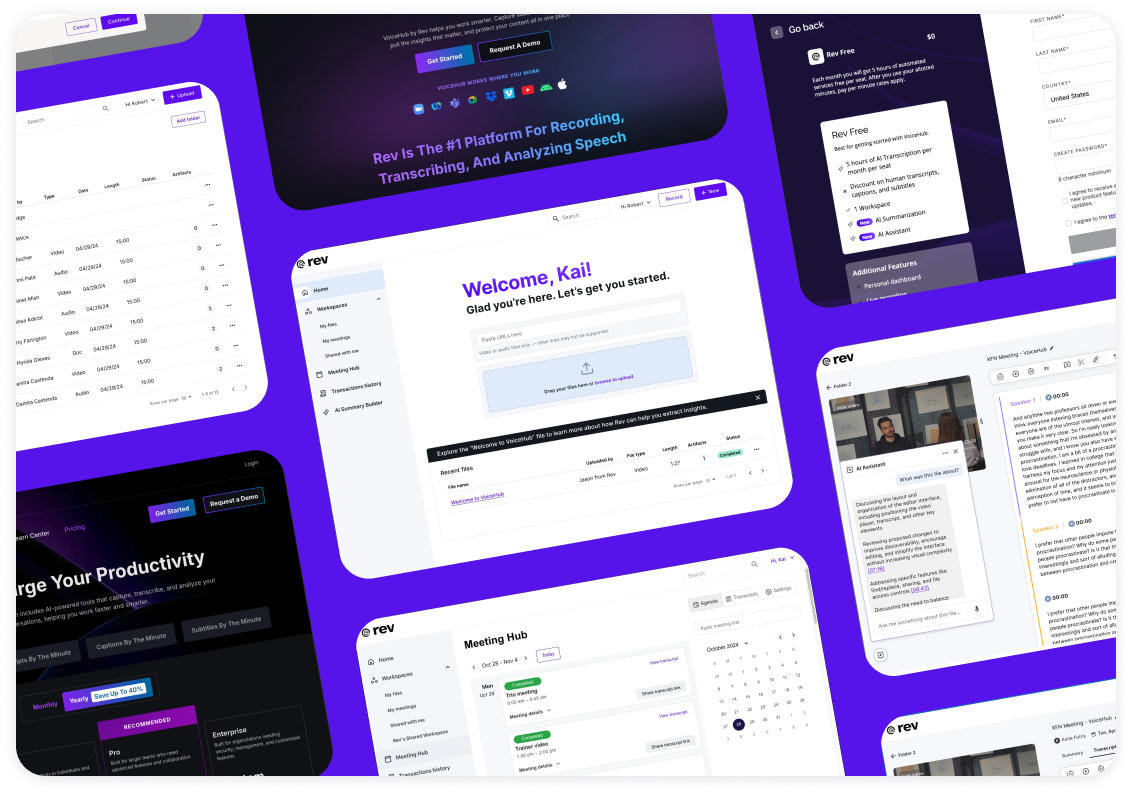
A transcription marketplace facing an AI cliff
Rev was established in 2010 as a freelancer transcription service. Its speech recognition now beats models like Whisper in accuracy, but in 2023 the business model hadn't caught up.
Problems to solve in 2023
Churn
Rapidly increasing.
Cost
Freelancer transcription costs far more than AI transcription.
Models
Speech recognition was improving fast, to above 90% accuracy.
Foundations
Rev was never built in a future-proof or scalable way.
“Stop the churn. Shift from transactional to SaaS. Quickly.”
From ordering a file to building a habit
A transactional service optimizes the order. A SaaS product earns repeat use. That changed what we measured and what every screen was for.
Before: transactional
- 01Capture
- 02OrderConversion, add-ons, premium artifacts, turnaround time
- 03Share
After: SaaS
- 01CaptureAcquisition, time to value
- 02ManageRetention, repeat usage, files per user
- 03SynthesizePerceived value beyond transcription
- 04ShareSharing and k-factor
An app people avoided, rebuilt in one quarter
A heuristic evaluation of the mobile app surfaced the top offenders. Within the first quarter of 2024 we rebuilt the core of it, then kept testing and iterating through the year.
The before: top offenders
No connection to the web experience
A coin system users didn't understand, built to skirt the app store tax
Recordings sometimes failed without telling the user
With the phone locked, you couldn't tell if it was still recording
Login sat halfway through checkout
Not HIPAA compliant, and failed AA accessibility
Rapid design process
- 01PrioritizeStagger the timeline with PM plans and engineering foundations
- 02ConceptV1 designs, with feasibility talks
- 03SocializeStakeholder feedback
- 04TestRapid usability and value-concept testing
- 05ShipIterate, implement, instrument tracking
- 06MeasureIterate where needed
What shipped
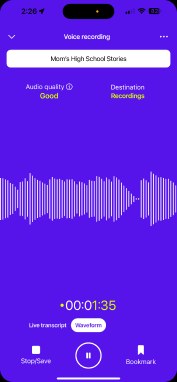
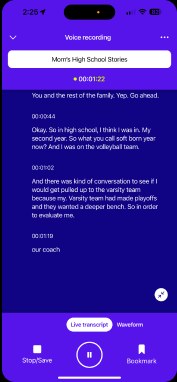
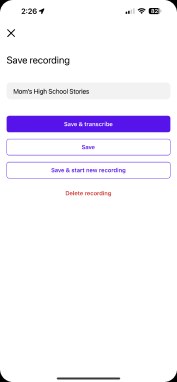
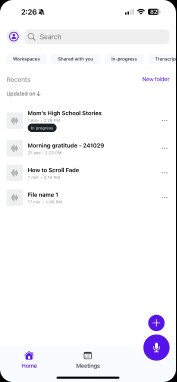
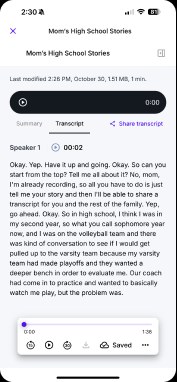
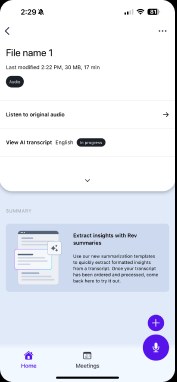
Login up front on the same identity as web. Live transcription with bookmarks. Minutes from your subscription instead of coins.
Outcome
Store ratings
The app also secured renewals from high-volume clients like ESPN and opened the app to HIPAA-compliant accounts.
Ten experiments in two months
After VoiceHub launched on September 9, 2024, a tiger team set out to find the High-Value Actions: the behaviors that make Rev a habit. Our product gains value when it becomes System 1, not System 2, so we cross-checked what people said against what they did.
October–November 2024
- 01Week 1Data & discovery: interaction data, a Pendo survey, users via sales
- 02Week 2Goals & hypotheses: key metrics, dashboards, test plans
- 03Weeks 2–4Design & launch 10 prioritized experiments
- 04Weeks 3–8Measure, synthesize, set next steps
If we simplify the first action to a single task, creating or uploading a file, Day 1 activation will increase.
- Paste-a-URL and one-click recording in the top navigation, on web and mobile
- Deprioritized the Meeting Hub container in the hierarchy
- Direct, concise messaging about getting started
22% 34%
1.8 2.9
4.1m 3m
If we automatically generate a summary for every transcript and put it in the notification email, retention will increase.
- Users of summaries and transcript chat transcribed 53% more files, so we stopped making people ask for a summary
- Summaries with timestamps in email, so people engage instead of download and leave
- Searchable templates with automated tags
1.7k 10.1k
69% 74%
A trainer file to explore will increase engagement with synthesis and improve Day 1 activation.
- With marketing, a trainer file with an educational video, sent to every new account
- Low-fidelity onboarding guides for key flows
34% 38%
2.3 4.2
6m 3.7m
Where it landed
The new real-time transcription and summary features have produced more than 66,000 AI-generated summaries for users.
The feature nobody used was the second most common job
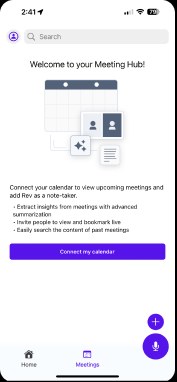
Almost no one connected a calendar, and those who did barely recorded. Then I realized we could run conversation types through our secure LLM, and “Meeting” kept ranking second. People were recording meetings, just not through the Meeting Hub.
What we knew
How we classified what people record
- 01SampleA targeted smart sample of the data
- 02ClassifyThe model labels conversation types and explains why
- 03GroupSynthesize similar categories
- 04TrackWatch leading types over time to steer features and marketing
Results
Meeting adoption up 5×, files shared per user up 6.5×, and calendars with zero meetings down from 80% to 2%.
Fifteen checkouts became one
The SaaS shift needed plumbing people never see.
Roles & permissions
A framework for enterprise admin control.
File parity
Collect, manage and synthesize files across devices.
File architecture
Many artifacts from one original file.
File management
Better organization, importing and sharing.
How we worked
Design was in high demand with few designers, so I built ways of working that let a small team move fast.
Token Studio
Scalable, consistent design tokens across design and engineering.
No-code AI prototyping
Faster validation, fewer desk checks.
UX Hub
Artifacts, context, planning and onboarding in one place.
UXR repository
Research insights organized, closing an institutional gap.
Silent critiques
Async feedback through Loom.
CREATE framework
Templatized for behavior change: cue, reaction, evaluation, ability, timing, experience.